What's in this email:

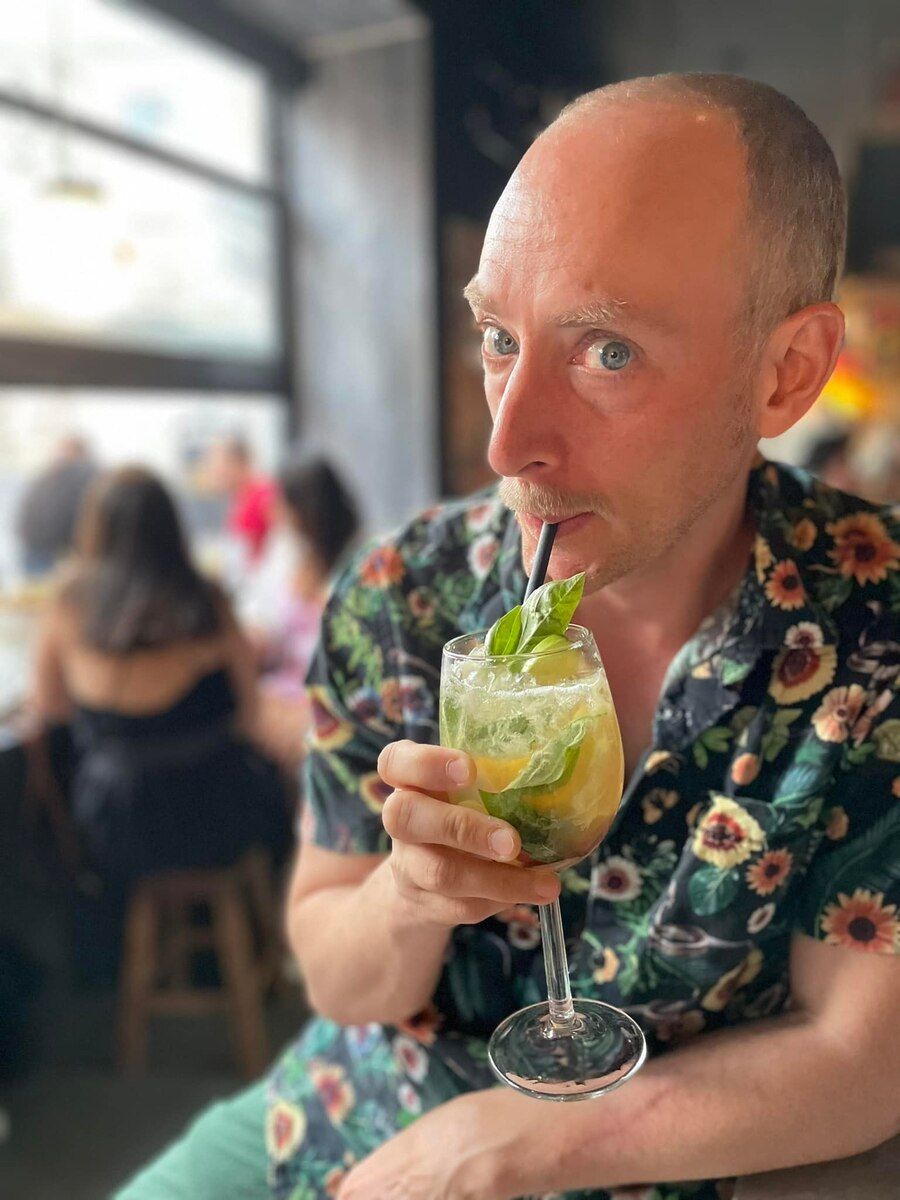
A typical SushiCon spread. Photo: Cathy Erway
One of the food-writing lessons I learned as an editor at Bon Appétit (back in the day) was that if you wanted to write about something serious — restaurant economics, mental health, racism, the sins of Big Agriculture — you first had make your readers hungry. And you did this by describing how delicious a particular food was. Hook ‘em on flavor, and you could get away with anything, no matter how complex or depressing. Make people want to eat something, and they will want to know more about it. It was very simple! So, with that in mind, let’s talk about how awesome SushiCon was!
New York’s SushiCon, if you haven’t heard of it, is a one-day wonderland of raw fish and the food items that surround it. Now in its third year, it featured more than 60 exhibitors, from fish farmers (Norwegian salmon! Peruvian steelhead trout!) to seaweed and rice importers to restaurants including Blue Ribbon Sushi. Walk inside and pick a line, and it’s essentially all-you-can-eat tuna, salmon, octopus, hamachi, scallops, caviar, and more. (Technically, most of it is served sashimi-style, rather than on nigiri rice.) With full-day passes for $190, and half-days at $135 — both of which included bluefin tuna-cutting demos — it was a fairly priced1 mega-indulgence reminiscent of a walking omakase.
So much of this was so, so good! I remember eating a slice of o-toro, or tuna belly, that coated my mouth with pure fatty richness, and I tasted a scallop so sweet and firm I never suspected it had been frozen and defrosted. As Cathy and I wandered from booth to booth, I found myself thinking back on my last few decades of sushi consumption — my first chirashi platter back in Baltimore, the tuna-kimchi rice bowl at Sakagura in Midtown, those raw shrimp with the slurpable heads in Kyoto, the sea squirts in Seoul, the yellowtail I slice at home… Compared with the half-dozen land animals we commonly consume, the creatures of the sea are shockingly varied, a near-infinity of flavors, textures, and preparations it’s hard to imagine ever exploring completely.
For my and Cathy’s thoughts on the full SushiCon experience, you should go listen to the latest episode of the Shut Up’ n Eat podcast! (It’s on Apple, Spotify, YouTube, and wherever else you get your podcasts.) But here I wanted to pick up on errant thread from the podcast, which is: Even with an ocean full of delicious edibles, SushiCon was dominated by bluefin tuna and Atlantic salmon — two of the tastiest fish in the sea, to be sure, but so popular that their production and harvesting have become controversial barometers of sustainability. With each bite of wild-ranched tuna belly and supple slice of farm-raised salmon, I wondered: Should I — should we — being doing this at all?
Two people I met at SushiCon offered some useful perspective on the question. One was my friend Bret Thorn, the senior food editor at Nation’s Restaurant News, who told me, “Honestly, I hope that salmon and tuna continue to dominate because they taste good and they're popular, and if they stop dominating, it's because there's not enough of it, that there's a supply issue. And if there's a supply issue, then that means that the fish are endangered, and I'm not on board with that.”
It’s a fair point he makes — that popularity and sustainability are interlinked. Because we humans want to keep eating them, we will (reluctantly and half-assedly) take the steps necessary to ensure tuna and salmon survive. Whereas if we didn’t care, we might let them go extinct without a second thought.
And according to Alex Choi, the founder of SushiCon, some of those efforts are actually working. “In terms of conservation-wise,” he said, “the Mediterranean has done a tremendous job in terms of really taking care of the bluefin population. So today, the number has actually exceeded when they actually first launched the conservation numbers, right?”
My own extraordinarily in-depth research seems to back him up: Since 2009, according to the World Wildlife Fund, the biomass of Mediterranean bluefin is up by 400%. Much of that seems due to limits placed on bluefin harvesting in the north and west Atlantic, where the Mediterranean bluefins do much of their dining on mackerel, herring, and menhaden (which are also protected). “Everyone is foraging at the best restaurants,” Stanford biologist Barbara Block said of the tuna in this report on her studies.
Of course, it’s all so much more complicated than simply hailing this as a success story. The Monterey Bay Aquarium, citing SeafoodWatch.org, says to avoid “all bluefin tuna, except for the wild-caught Pacific bluefin tuna sources we recommend.” Unfortunately, no specific sources are mentioned, though Bluefina, Inc., which I believe provided one of the tuna for the cutting demo at SushiCon, wild-catches — then raises and harvests, killing them ikejime-style — its Pacific bluefin off the coast of Baja California. It’s not clear to me whether Bluefina’s “ranching” process meets with SeafoodWatch’s standards, and that’s the heart of the problem: At the fishmonger or at the sushi counter, you never really know what you’re getting. You’re trusting someone who’s trusting someone who’s trusting someone who’s trusting someone that the fish was raised, caught, fed, killed, and processed in a way that isn’t ruining the planet.
Things get even murkier when you look at salmon. Right after I got back from SushiCon, I read this New York Times Magazine article about the environmental dangers of aquaculture. The details are crazy: In Norway, open-ocean structures can house up to 1.5 million salmon, and in the deep-inland Chinese desert region of Xinjiang, they’ve replicated oceanic conditions to raise massive numbers of “salmon, trout, crayfish, bass, carp, crab, shrimp and tilapia.“
The problem with all of this is that those salmon (and trout, crayfish, bass, carp, crab, shrimp, and tilapia) need to eat something, and what they eat is fishmeal — essentially ground up bits of other, smaller fish, processed into a stable source of nutrients and energy for the bigger, tastier, more popular fish. And from the looks of this article, the fishmeal industry is, to use a technical term, bad. Dangerous for workers, harmful to the environment surrounding factories, often violating both local and international laws, and responsible for a product that, combined with the waste from, say, 1.5 million Norwegian salmon, creates a “noxious sludge” on the ocean floor. You know — bad! All to produce that meaty, rich, affordable salmon we love so much.
This is all depressing stuff! We Americans eat too much meat, especially beef, which is unhealthy despite what RFK Jr. says, not to mention bad for the environment, but when we try to switch to seafood, we find out the industry that supports it is also just as bad, so what the heck is a hungry, adventurous eater supposed to do? I mean, besides consume nothing but beans, which are probably unsustainable and unethical in some way we haven’t even imagined yet.
Me, I think I already have my own personal solution to this omnivore’s dilemma: I will change nothing about my behavior.
I will continue to eat bluefin tuna and Atlantic salmon just as often as I have up till now, which is, to use a technical term again, “occasionally.” If there is ranched bluefin on the menu, I will enjoy it — gimme that o-toro! — and if the fish counter at Whole Foods has a significantly better price on farm-raised Norwegian salmon than on wild-caught from Nova Scotia, then I know what I’m making for dinner that night. And if the kids demand sushi at home one night, I’ll take whatever HMart happens to have in stock. And yeah, I’ll feel a little guilty, because I know that on some level I am guilty, though less guilty than the polluters, abusers, and criminals who’ve built this corrupt system. And whatever guilt I do feel, I’ll assuage with the knowledge that for the most part I seek out the other, less popular fish — the ignored and the overlooked, the oily and the bony, the nerds, dweebs, and geeks of the ocean, who, if you push past their unfamiliar names and awkward shapes, are more interesting, more satisfying, and, yes, more damn delicious than the A-listers.
You are invited to join me in exploring the rest of the ocean — but you don’t have to. If you’ve read this far and you still crave salmon and bluefin above all else, that’s fine. At this point, you’re making an informed decision and are comfortable with whatever level of culpability you’ve decided you bear in this process. (Maybe a lot? Maybe none!) None of us is pure, and none is a monster, and we’ve all got to figure things out as best we can. If we can extract a little joy along the way — maybe with a few drops of good soy sauce and some freshly grated wasabi — is that really so wrong?
Listen to the podcast now!
Your Fall Glow-Up Comes in Two Cups

Pique’s Radiant Skin Duo pairs antioxidant-rich Sun Goddess Matcha with B·T Fountain, a beauty electrolyte for hydrated, plump-looking skin. In a trial of B·T Fountain’s ceramides, hydration improved 37% and elasticity 36% by day 60. Subscribe for 20% off for life, backed by a 90-day money-back guarantee.
The best things Peter ate last week — in NYC!

The pepperoni diavola at 4P’s and the French toast dessert at Lok Kee.
Pizza 4P’s: I had the cream sauce spaghetti with oysters and nori — delightful! — and the pepperoni diavola pizza. The crust lived up to the hype — a true Tokyo-style Neapolitan pie.
Hen House: I’ve been wanting to try this Lebanese shawarma place for the past couple NY trips, and finally had the time to drop by. I thoroughly enjoyed the juicy chicken shawarma with garlic sauce and crispy pita. Thanks, chef Antony, for sending out falafel chips as well!
Lok Kee: Shut Up ‘n Eat dinner outing with Cathy and Matt! We had a blast at chef Lucas Sin’s pop-up inside M Star Cafe. The highlights were the salted egg yolk pumpkins, curry-smothered pork chops, and the french toast dessert with ice cream!
Kirbee’s BBQ: I’ve spent a lot of time in Texas, whether it's visiting family in Houston or eating in Austin, so Texas BBQ is very dear to my heart (and my stomach). Kirbee’s, from two Texas pitmasters (Chuck from Barb’s in Lockhart, Jonny from Goldee’s in Fort Worth), opened to much acclaim this year, and although I was worried about long lines, my friend and I got lucky: no line! The brisket was as good as any I’ve had in Houston or Austin, and we loved the popular chile verde spaghetti — what a cool and yummy dish!
1 As media, Cathy and I got in free.