What's in this email:

Chinatown old and new: Wonton noodle soup with roast duck at Great N.Y. Noodletown, left, and the iconic celtuce salad.
About ten minutes after we wrapped our interview with Lei owner Annie Shi and chef Patty Lee — the subject of our latest podcast! — Cathy had left and I was packing up my recording gear, when Lei received a surprise visitor: Grace Young. Grace is a cookbook author and (accurately) self-described “stir-fry guru,” “wok guru,” and “accidental voice of Chinatown.” In other words, she’s a legend.
She was there to bring Patty a gift of snacks from Kuih Cafe, a nearby hole-in-the-wall dedicated to Malaysian-style desserts, from the traditional cakes known as kuih — bouncy, lightly sweet, and often in vibrant colors like green, from pandan leaves, or blue, from butterfly-pear flowers — to innovations like the mochi madeleines Grace had purchased. That day, they came in three flavors: chocolate-pineapple, grated coconut in palm sugar, and salted duck egg with pork floss. Kuih Cafe opened in 2020 — not a great year to launch a project, especially in Chinatown — and that’s long enough ago that it’s no longer a true newcomer, but also not yet part of the establishment. People who hang out and eat a lot in Chinatown know it, but may forget it, and how creative it is, until they periodically rediscover it, and remember how well it preserves well-known flavors while also launching new creations into the world.
And as Grace and Patty enthused over the mochi madeleines, Patty offered her own recent discovery: Ga Ga Jiao, a tiny Fuzhou restaurant on East Broadway that serves, among other things, potato balls. And those, too, require an explanation! See, Fuzhou is famous for its fishballs — golf-ball-size spheres of fish paste wrapped around a core of savory-sweet ground pork, usually served bobbing in a clear chicken broth. Those are awesome in their own right, but Ga Ga Jiao (which I visited after hearing Patty rave) sells the inland version, where the fish paste has been replaced by potato. The texture is wonderful, bouncy and chewy and soft all at once — reminiscent, if you think really hard about it and crave a Western analog, of gnocchi.
To hear Grace and Patty trade tips, and then to follow those and taste them for myself, reminded me of why, and how much, I love Manhattan’s Chinatown. I’ve been exploring it ever since I moved to New York City 28 years ago (longer if you count my visits during childhood), and I’ve never stopped being amazed at how a neighborhood that can appear to be so old, so tradition-bound, can also so consistently produce new ideas, new flavors, new (and lasting) trends.
Once upon a time in Chinatown, it was hard to find dumplings. Specifically, potstickers 鍋貼 and boiled dumplings 水餃. Oh, a few restaurants served them, but in the late 1990s, Chinatown was still mostly Cantonese (and Fujianese), and those dumplings were northern Chinese (and maybe Taiwanese), so they just weren’t a thing.
Until the summer of 1998. That’s when a gruff man with northern Chinese accent started making potstickers at Dragon Gate Market, a collection of vendors that had been in Sara Delano Roosevelt Park, at Grand between Forsyth and Chrystie, since 1994. He had, as I remember, two deep-dish cast-iron pans that could accommodate 30 dumplings or more, and he’d fry them up, batch after batch, selling four or five on a styrofoam plate for a dollar or two, and Sriracha and black vinegar to sauce them with. I had just moved to New York, living on nearby Division Street, and this was a revelation.
Dragon Gate did not last much longer. In early 1999, the New York Times reported, “The lease for the market was terminated in December by the city, which cited late rent payments and said the vendors' stalls, some of which resembled permanent structures, violated building codes.” While the vendors protested, eventually they all departed. Today the park is a soccer pitch.
But the dumpling guy did not disappear. Instead, he became the first chef at Vanessa’s, which opened a few months later, around the corner on Eldridge Street. Vanessa’s — which was, as far as I know, fully legit — replicated his recipe, and it not only survived but took off, spawning multiple branches and inspiring other potstickeries across Chinatown and beyond. And that, my friends, is why you can eat dumplings all the time now.

I feel lucky to have witnessed revolutions begin. Once upon a time, bubble tea was a rarity, an oddity — available more or less only at Saint’s Alp Teahouse, a Hong Kong import that set up shop on Mott and Bayard, until the mid-2000s. They served it hot! Rice rolls, mochi doughnuts, bánh mì — all circulated in Chinatown for years before becoming foods that everyone might want to eat anywhere. You could even argue that the modern-day cocktail revolution got its start in Chinatown — the legendary bar Milk & Honey was half a block up Eldridge from Vanessa’s.
What I love about finding new things in Chinatown is how uncontrived they are. That is, few food businesses seem designed from the outset to become the kind of places that, say, Eater or Grub Street would report on. They don’t have publicists or a sophisticated Instagram presence. Instead, they’re focused on their niches — a particular style of food for a particular subset of locals they know, or hope, will pay for it. And because of that focus, that lack of concern for what excites the food-media business, they wind up creating marvelous treats that, eventually, everyone everywhere wants to try. That’s Ga Ga Jiao right there. Maybe?
The flip side of that is that sometimes those niches disappear and the revolutions fizzle. Chinatown used to have tons of Chinese-Malaysian restaurants that catered to the neighborhood’s Chinese-Malaysian population. There was Proton Saga, named for Malaysia’s home-grown automobile brand, and Overseas Asian Taste, which had an excellent curry chee cheong fun at breakfast, and Ipoh, occasionally known as Happy Joy, whose stingray curry and egg tofu were staples of my diet for a decade. (None of those three served kuih, as far as I remember.) There were probably even more I’ve forgotten, and they all closed, presumably because their customers moved away1, to be replaced by the hipsters of Dimes Square. When a few years ago, Kopitiam moved in on East Broadway, serving many of the same dishes as my long-gone beloveds, it felt weird: new and old, familiar and foreign — but also delicious, which is, in the end, the only thing that matters.
Our map of Chinatown
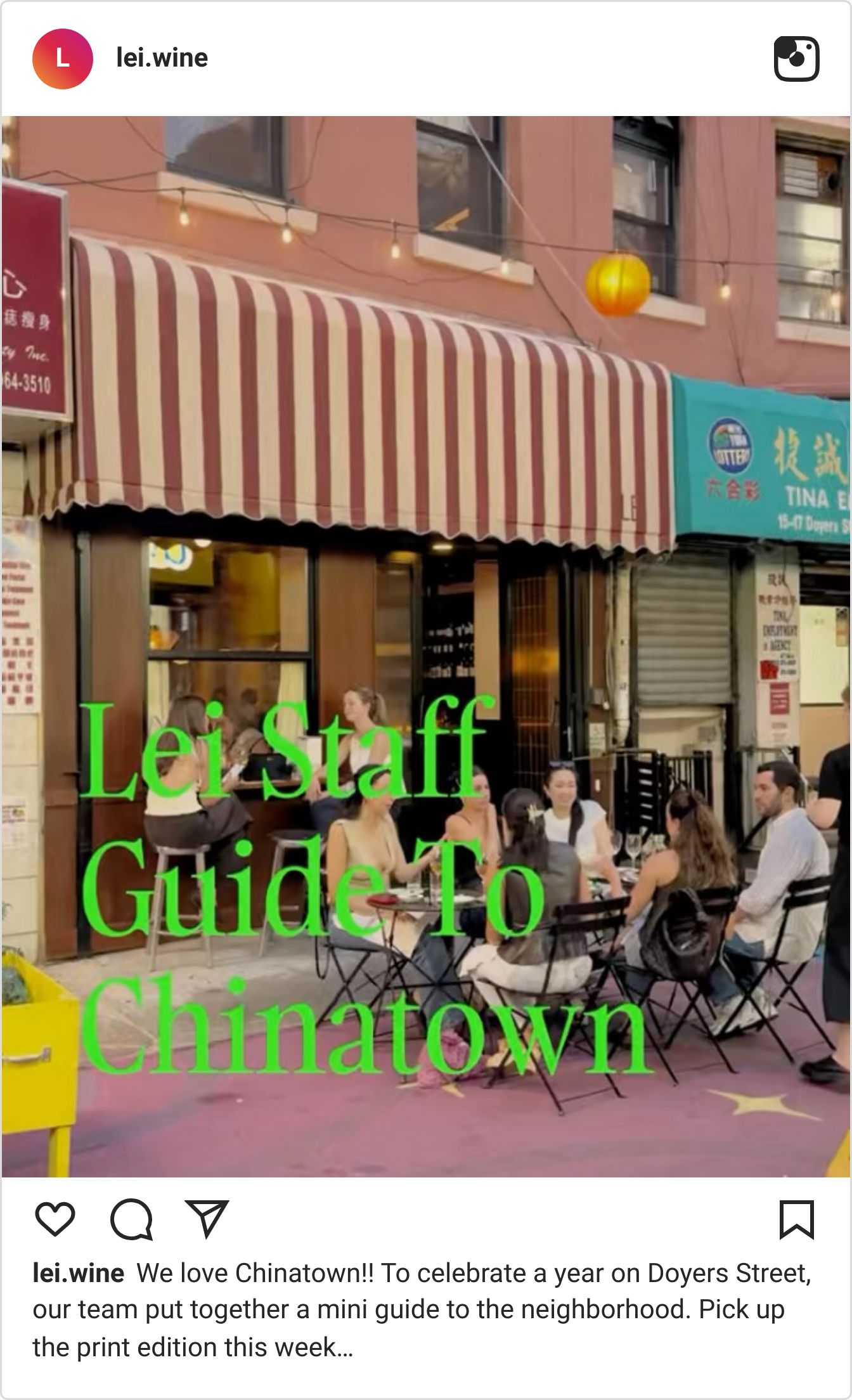
Okay, we got all excited thinking about the places we love in Chinatown, so Cathy and I put together this — the first official Shut Up ‘n Eat map! It doesn’t cover absolutely everywhere worth eating in Chinatown (that’s impossible), but it does balance old and new, well-known and more obscure, with notes on each restaurant and shop that we hope you’ll find useful. Enjoy!

Go listen to the podcast!
1 Or did something else happen? If so, I’d love to know the precise mechanics!